

You're staring at a complex engineering drawing, a P&ID, trying to make sense of it. You see a pump symbol, but it looks different, and you're not sure what it does. This confusion can lead to serious mistakes in ordering parts or understanding a process.
That special symbol is likely the metering pump p&id symbol. It's usually a standard pump circle with a letter like 'D' inside for 'Dosing'. The tag number next to it reveals its exact function, telling you if it runs continuously or is part of a complex control loop.

This reminds me of a panic call I got from my friend Hassan, the Chief Engineer. His team was installing a new chemical injection system. He saw a metering pump p&id symbol on the drawing, P-205, and ordered a simple, fixed-rate pump. Later, he realized the tag number was tied to a control loop connected to a pH analyzer (AIT-205). The pump needed to change its speed automatically based on the pH reading. His simple pump wouldn't work. It was a scramble to re-order the right pump with a variable speed drive. It was a classic lesson: the metering pump p&id symbol tells you what it is, but the tag and surrounding instruments tell you how it works. Misreading that little drawing almost caused a huge delay.
What Does the Basic Metering Pump P&ID Symbol Look Like?
You’re scanning the P&ID, and the jungle of circles, squares, and lines starts to blur. You know there’s a dosing pump somewhere, but picking out the specific metering pump p&id symbol feels impossible.
Look for a circle, the general symbol for a pump. For a metering pump, it will often have a letter inside, like 'D' for Dosing or 'PD' for Positive Displacement. This small detail separates it from standard centrifugal pumps.
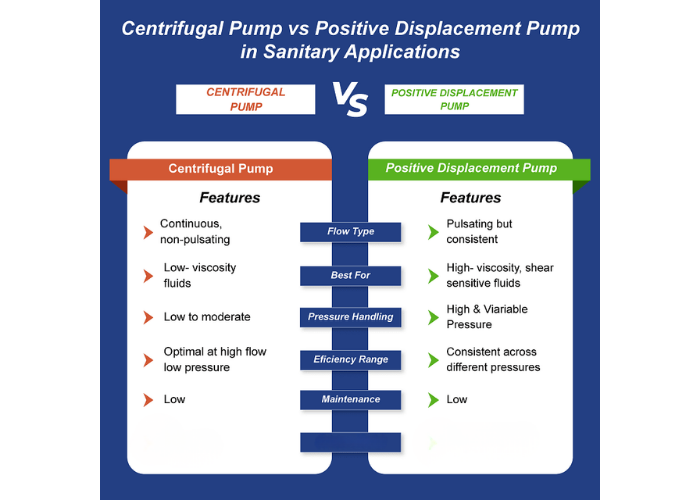
The official standard for these drawings is ISA S5.1. It gives us a common language. In this language, a simple circle means 'pump'. But we need more detail than that. A centrifugal pump, which just moves a lot of liquid, usually has its outlet line coming from the edge of the circle. A positive displacement pump, like a metering pump, often has its outlet line coming from the top. The most important clue, however, is what's inside the circle. A standard metering pump p&id symbol builds on this basic shape to give you more information. You might see different variations, but they all point to a device that delivers a precise amount of fluid. Seeing this specific metering pump p&id symbol instantly tells an engineer, "This pump is for accurate dosing, not just bulk transfer." It’s the first step in understanding the pump's role in the process.
Decoding the Symbol's Parts
To truly understand the metering pump p&id symbol, you have to look at its components.
| Symbol Element | What It Means | Why It's Important |
|---|---|---|
| Main Circle | The basic symbol for any pump. | This is your starting point. You know you're looking at a pump. |
| Letter 'D' or 'PD' Inside | 'D' for Dosing, 'PD' for Positive Displacement. | This is the key identifier. It confirms you've found the metering pump p&id symbol. |
| Motor Symbol (M) | An 'M' in a circle connected to the pump. | Shows it's driven by an electric motor, the most common type. |
| Outlet Line from Top | Convention for positive displacement pumps. | Differentiates it from a centrifugal pump, whose line often exits the side. |
Understanding this basic metering pump p&id symbol is like learning the alphabet. Now you can start to read the words and sentences that are built around it.
Why is the Tag Number More Important Than the Symbol Itself?
You've found the metering pump p&id symbol. Great. But you still don't know its size, what it's made of, its flow rate, or how it's controlled. The symbol alone doesn't give you the full story.
The tag number right next to the metering pump p&id symbol is the real key. This string of letters and numbers (like P-101A) is a unique ID that links the drawing to a detailed specification sheet. That sheet has everything you need.

The tag number is the bridge between the simple drawing and the real world. While the metering pump p&id symbol is generic, the tag number is specific. Let's break down a typical tag, like 10-P-101A.
10: This often refers to the plant area or unit number. For example, Unit 10, the water treatment area.P: This letter code tells you the equipment type. 'P' is for Pump. 'T' is for Tank, 'V' is for Valve.101: This is the unique number for that specific piece of equipment in that unit.A: This letter often indicates a primary or spare unit. P-101A might be the main pump, and P-101B is the installed backup.
When you have this tag number, you can go to the project's instrument list or equipment list. There, you will find all the details: the pump's exact type (diaphragm, plunger), the material of the pump head (e.g., 316SS, PVC), the required flow rate, the pressure it works against, and the motor power. The metering pump p&id symbol gets you in the door, but the tag number unlocks all the secrets. This is why you should never make an purchasing decision based on the metering pump p&id symbol alone.
What Other Symbols Work with the Metering Pump?
You've identified the metering pump p&id symbol and its tag. But a pump never works alone. It's part of a system, and the P&ID shows all the other parts that support it.
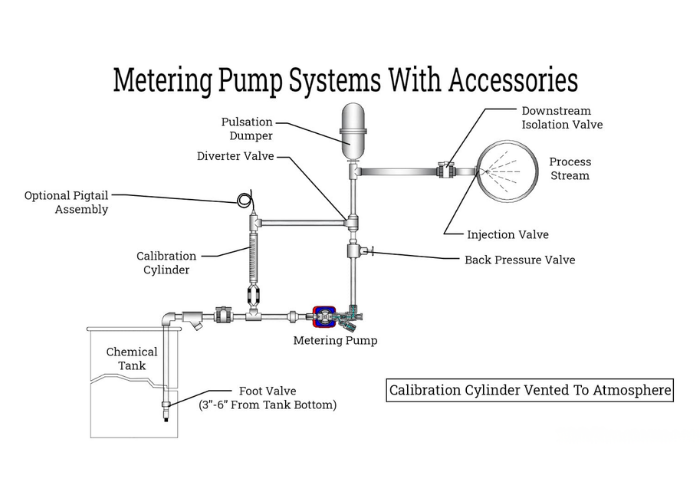
You need to recognize the symbols for check valves that prevent backflow, pulsation dampeners that smooth out the flow, and pressure gauges that monitor the system's health. They all work together.
Сайт metering pump p&id symbol is the heart of a small but critical system on the P&ID. Let's look at its teammates.
- Piping: The lines connected to the pump are the arteries. A thicker line usually means it's the main process pipe, while a thinner line might be for the chemical dose itself.
- Check Valves: This symbol looks like a sideways 'Z' inside the pipe. You will always see one on the discharge side of a metering pump to prevent the process pressure from pushing fluid backward through the pump.
- Pulsation Dampener: This looks like a small vessel or dome sitting on the pipeline. Metering pumps create a pulsed flow (squirt, squirt, squirt). This device absorbs those pulses to create a smoother, more even flow downstream. Understanding this symbol alongside the metering pump p&id symbol helps you visualize how the system performs.
- Pressure Relief Valve (PRV): This is a safety device. It's a valve symbol with a spring on top. If the line gets blocked, the PRV opens to protect the pump and pipe from overpressure.
- Instruments: You'll see circles in the pipeline with letters inside.
ПИis a Pressure Indicator (a simple gauge).FITis a Flow Indicating Transmitter, which means it measures the flow and sends that information to a control system. These tell you how the system is monitored and controlled. Recognizing these is just as important as knowing the metering pump p&id symbol.
Frequently Asked Questions (FAQ)
1. Is there one single P&ID symbol for all metering pumps?
No. While there are common anventions, like a 'D' in a pump circle, the exact symbol can vary by company. The tag number is the only universal key.
2. How do I know if the pump is variable speed on a P&ID?
Often, a control line (a dashed line) will connect from a control system symbol (like a square with FIC) to the motor on the metering pump p&id symbol.
3. What's the difference between a pump and a compressor symbol?
A pump symbol is a simple circle. A compressor symbol often looks like two circles overlapping or a trapezoid shape to indicate it works with gases.
4. Why are check valves so important for metering pumps?
They are critical. They ensure the pump primes correctly by holding liquid in the head and prevent dangerous backflow from the higher-pressure process line.
Заключение
Understanding the metering pump p&id symbol and its surrounding system is vital. It allows you to read the engineering language for design, installation, and troubleshooting, ensuring processes run safely and accurately.
 English
 Arabic
 Russian
 French
 Spanish