

You need a reliable pressure reading for a critical system. But choosing the wrong gauge can lead to failure, downtime, and safety risks. Here’s how to select one you can trust.
An industrial pressure gauge is a crucial instrument for monitoring process safety and efficiency. To ensure it won't fail, you must select one made from robust materials like stainless steel, designed to handle vibration (often by being liquid-filled), and with a pressure range suitable for your specific application.
Growing up, my father’s valve factory was my playground. I learned early on that the smallest components often carry the biggest responsibilities. He used to hold up a gauge and say, "Emily, this is the voice of the machine. If it lies, the whole factory can go silent." Now, working with chief engineers like Hassan on massive petrochemical plants, that lesson is more true than ever. A failed industrial pressure gauge isn't just an inconvenience; it can be a disaster. Let me share what decades of experience have taught me about choosing a gauge that speaks the truth and doesn't quit.
Why Do So Many Industrial Pressure Gauges Fail Prematurely?
You’ve installed new gauges, but the needles are fluttering, or they’ve stopped working entirely. This constant replacement cycle is wasting time and money. What could be going wrong so quickly?
Most failures are caused by factors the gauge wasn't designed for: vibration, pressure spikes, and chemical corrosion. A standard, dry utility gauge simply can't survive the harsh environment of an industrial process for long.
Let's dive deeper into these three silent killers of gauges. Understanding them is the first step to defeating them. In any plant, you have pumps, motors, and compressors that create constant vibration. At the same time, the fluid or gas in your pipes doesn't flow perfectly smoothly; it moves in pulses. This combination of shaking and pulsing is a brutal test for a delicate instrument. Hassan, the chief engineer, once told me, "We used to replace gauges on our main compressor lines every month. It was like they were shaking themselves apart." This is a common story, and it's why we need to think beyond the most basic industrial pressure gauge. The constant fluttering of the needle doesn't just make it hard to read; it rapidly wears out the internal gears and linkages, leading to a loss of accuracy and eventual failure.
The Enemies: Vibration, Pulsation, and Corrosion
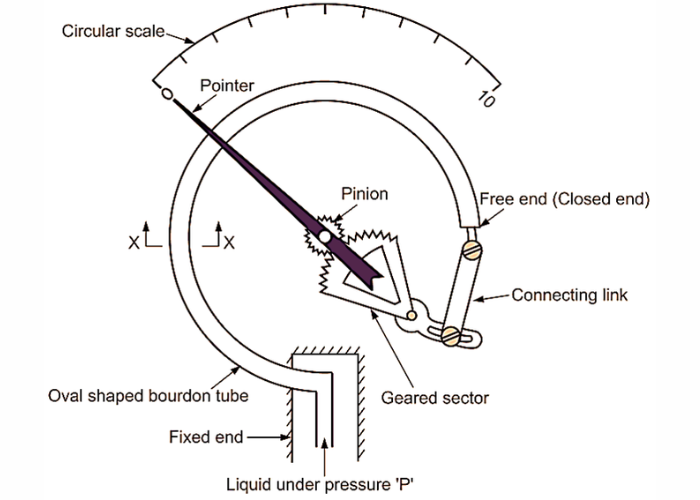
- Vibration & Pulsation: This one-two punch is the most common cause of failure. The machine's vibration shakes the entire gauge, while pressure pulses from pumps make the internal Bourdon tube flex rapidly. This wears out the gear mechanism, causing the needle to stick or read incorrectly.
- Corrosion: The "wetted parts" of the gauge are the components that touch the process fluid. If the material (often brass in cheap gauges) is not compatible with the chemical you're measuring, it will corrode. This can cause leaks or block the pressure port, leading to a catastrophic failure.
The Solution: Robust Design and Materials
This is where a purpose-built industrial pressure gauge proves its worth. Here’s how they solve these problems:
| Feature | Standard Dry Gauge | BCST Liquid-Filled Industrial Gauge | The Advantage |
|---|---|---|---|
| Case Filling | Empty (Air) | Glycerin or Silicone Oil | The liquid dampens vibration and pulsation, resulting in a steady needle and drastically reduced wear on internal parts. |
| Wetted Parts | Brass or Carbon Steel | 316L Stainless Steel | 316L SS offers superior resistance to a wide range of corrosive chemicals, ensuring long-term integrity and safety. |
| Case & Bezel | Plastic or Painted Steel | 304 Stainless Steel | A full stainless steel case resists rust and physical impacts common in industrial settings, protecting the gauge's internals. |
| Lens | Plastic | Laminated Safety Glass | Safety glass won't yellow or scratch easily, ensuring a clear view of the reading, and it offers better protection from impact. |
Hassan’s compressor problem was solved the moment he switched to our liquid-filled stainless steel gauges from bcstgroup.com. Those gauges are still operating accurately years later. It's a perfect example of how choosing the right tool saves money and headaches in the long run.
How Do You Select the Correct Pressure Range and Size?
You're looking at a data sheet, and you see options for pressure range and dial size. Choosing the wrong range can lead to inaccurate readings, while the wrong size can make it unreadable.
To select the correct pressure range, find a gauge where your normal operating pressure falls in the middle third of its scale. For dial size, choose one that is large enough to be read clearly from its typical viewing distance.
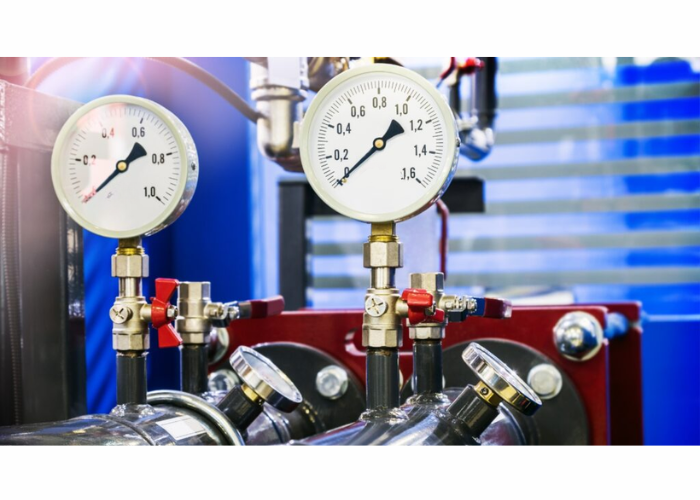
This seems simple, but getting it wrong is a very common mistake. I once visited a client who was complaining that their process wasn't stable. They showed me an industrial pressure gauge with a range of 0-1000 PSI on a line that normally operated at 50 PSI. The needle was barely moving off the zero pin! It was impossible for them to see the small pressure fluctuations that were causing their problems. They weren't having a process issue; they were having a measurement issue. Selecting the right range and size isn't just about technical correctness; it's about making the gauge a useful, practical tool for your operators.
The "Middle Third" Rule for Pressure Range
A pressure gauge is most accurate in the middle third of its range. This is a fundamental rule for ensuring reliable measurements.
- Step 1: Determine Your Normal Operating Pressure. Let's say your system typically runs at 80 PSI.
- Step 2: Double It. A good rule of thumb is to select a gauge with a maximum range that is approximately double your normal operating pressure. In this case, 80 PSI x 2 = 160 PSI.
- Step 3: Choose the Next Standard Range. The closest standard gauge would be a 0-160 PSI or 0-200 PSI model. This places your 80 PSI operating point right in the middle of the dial, where it is most accurate and easiest to read.
Never choose a gauge where your operating pressure is near the maximum limit. This puts too much stress on the internal Bourdon tube, leading to premature fatigue and failure. It also leaves no room for occasional pressure spikes, which could destroy the gauge. This is a critical consideration for any industrial pressure gauge application.
Choosing the Right Dial Size
The choice of dial size is all about readability. You need to consider how far away the operator will be when reading the gauge.
| Dial Diameter | Typical Reading Distance | Common Applications |
|---|---|---|
| 2.5" (63mm) | Up to 4-5 feet | Equipment panels, small machinery, tight spaces. |
| 4" (100mm) | Up to 10-12 feet | Main process lines, outdoor installations, general plant use. |
| 6" (150mm) | Up to 20 feet | High-visibility areas, critical process monitoring, overhead pipes. |
A larger dial costs more, but if it prevents an operator from making a mistake because they misread a small dial from a distance, it's a worthwhile investment in safety and operational quality. Always think about the person who will be using the gauge every day.
When Is a Standard Industrial Pressure Gauge Not Enough?
Your process involves thick, corrosive, or extremely hot fluids. You know a standard gauge will clog or corrode in minutes. Is there a way to measure pressure without the gauge ever touching the fluid?
Yes, for these challenging applications, you need a Diaphragm Seal. This device isolates the gauge from the process fluid, protecting it from corrosion, clogging, and extreme temperatures while accurately transmitting pressure.
When I first started, I couldn't understand why a customer would pay more for a diaphragm seal than for the industrial pressure gauge itself. My father explained it with a simple analogy. He said, "If you have to measure the temperature of a volcano, you don't stick a thermometer in the lava. You use a tool that can feel the heat from a safe distance. A diaphragm seal does the same for pressure." This is the kind of problem-solving Hassan deals with daily, where direct measurement is impossible. He needs to measure the pressure of thick crude oil or highly corrosive acids. A standard gauge would be destroyed instantly.
What is a Diaphragm Seal?
A diaphragm seal (also called a chemical seal) is a protective device that attaches to the base of your pressure gauge. It consists of a flexible membrane (the diaphragm) that separates the process fluid from a captive fill fluid inside the system.
Here’s how it works:
- The process fluid pushes against the external side of the diaphragm.
- The diaphragm flexes inward, pressurizing the clean, stable fill fluid trapped between it and the gauge.
- This pressure is perfectly transferred through the fill fluid to the industrial pressure gauge, which then displays the reading.
The gauge itself never touches the harsh process fluid. It only ever feels the pressure of the clean fill fluid. This elegant solution allows you to use a standard industrial pressure gauge to measure the pressure of substances that would otherwise destroy it.
When Should You Use a Diaphragm Seal?
You should always consider using a diaphragm seal when your process fluid has one of the following characteristics:
- Corrosive: Prevents corrosive media from eating away at the gauge's wetted parts.
- Viscous or Slurry: Prevents thick liquids or fluids with suspended solids (slurries) from clogging the small pressure port of the gauge.
- Extreme Temperatures: The seal, often connected with a cooling element, can protect the gauge from process temperatures (hot or cold) that are outside its normal operating limits.
- Hygienic Requirements: For food, beverage, or pharmaceutical applications, sanitary seals with smooth, crevice-free surfaces are used to prevent bacterial growth.
At BCST, we can help you select the right diaphragm material (like 316L SS, Hastelloy, or Tantalum) and fill fluid to match your exact application. It’s a critical step for ensuring reliability in the toughest environments.
Conclusion
Choosing the right industrial pressure gauge is vital for safety and efficiency. By considering vibration, materials, pressure range, and special application needs, you ensure your instruments are reliable investments, not recurring problems.
 English
 Arabic
 Russian
 French
 Spanish