

You've invested in automation but see little improvement. Your factory's efficiency and quality are still inconsistent. The problem isn't the machines; it's the strategy.
Valve automation is essential not just to cut labor costs, but to systematically solve problems of product consistency, efficiency, and quality control. It moves your factory from relying on individual skill to relying on a stable, repeatable, and data-driven manufacturing process.

For years, I've walked through valve factories all over the world. My father built our company, BCST, on the principle of quality, and I've seen firsthand what works and what doesn't. Many factory owners buy impressive robots hoping to solve all their problems, but they often end up disappointed. They focus on replacing a person instead of fixing a process. True automation success comes from a deeper understanding of your production challenges. Let's break down how you can build a truly effective automated system for your valve factory, one that delivers real results.
Why Is Relying on Your Best Workers Holding You Back?
Your most experienced technician is the hero of your factory, solving every problem. But when they are sick or leave, production quality drops. Your success depends on one person's skill.
Relying on individual experience makes your entire production process fragile. Automation's first and most important job is to capture that expert knowledge. It embeds their skill into a stable, repeatable process that a trained operator can run, building a resilient manufacturing system for your business.

I grew up watching "maestros" in my father's factory. These were the technicians who could tune a machine by sound or feel the right torque for a valve assembly. We relied on them completely. But this created a huge risk. When a key person was unavailable, or a new employee started, our quality and output would suddenly fluctuate. You’ve probably seen this too. You have the same drawings, the same machines, and the same materials, but you get different results depending on who is working that day. This isn't a stable manufacturing capability; it's just a collection of individual skills. Today, with engineers like Hassan designing entire chemical plants, they can't afford that kind of variability. They need to know that every BCST valve they specify will perform exactly as expected, every time. That level of trust can only be built on a stable process, not on the hope that a particular skilled worker was on the assembly line that day. Automation is the bridge. It takes the "feel" and "experience" of your best people and turns it into measurable, controllable parameters—machine settings, program logic, and quality checks—that deliver consistency shift after shift.
Is Automation Really Just About Cutting Labor Costs?
You see the high cost of labor and think buying a robot is the obvious answer. But this narrow view makes you miscalculate the real return on investment. You end up disappointed with the results.
The real value of automation isn't just in replacing a worker's salary. It's in drastically reducing the hidden costs of manual errors, such as rework, scrap, customer complaints, and warranty claims. Automation boosts your net production of qualified products.

If you only compare a worker's monthly salary to a machine's price tag, you're missing the big picture. I've had this exact conversation with factory owners who were frustrated with their new "expensive" equipment. They weren't seeing the savings they expected because they were looking in the wrong place. The real enemy of profit isn't the hourly wage; it's the cost of inconsistency. Think about assembling a brass ball valve. A person has to install the seats, the ball, the stem, the seals, and the handle. A skilled worker gets it right most of the time. But over thousands of cycles, mistakes happen. A seal is forgotten, a part is put in backward, or the packing nut isn't tightened correctly. These small errors create huge downstream costs. The problem might not even show up until final testing, or worse, after the valve has been shipped to your customer.
The True Cost of Production: Manual vs. Automated
Let's compare the real costs. Don't just look at the direct labor. Look at the total cost to produce one good, qualified valve that your customer keeps.
| Cost Factor | Manual Process | Automated Process |
|---|---|---|
| Direct Labor | High | Low |
| Rework & Re-testing | High (due to human error) | Very Low |
| Scrapped Materials | Moderate to High | Very Low |
| Customer Returns | Can be high | Negligible |
| Reputation Damage | Unmeasurable but significant | Protects Brand Trust |
| Throughput Consistency | Variable (depends on worker) | Highly Stable |
When you analyze it this way, the financial case for automation becomes clear. It's not about saving one salary. It's about saving the massive costs associated with a process that you can't fully control. It’s about ensuring that the product you make is the product you sell, without the costly detours of rework and returns.
What Kills Your Profit More: Slow Speed or Unstable Quality?
You want faster production, but speed without consistency is just chaos. A fast line that produces bad parts only creates scrap faster. This causes huge management headaches and hidden financial losses.
An unstable production process is far more damaging than a slow one. The most valuable goal of automation is not speed; it's control. By monitoring key parameters in real-time, you can control process variations and ensure every valve is made to the same high standard.
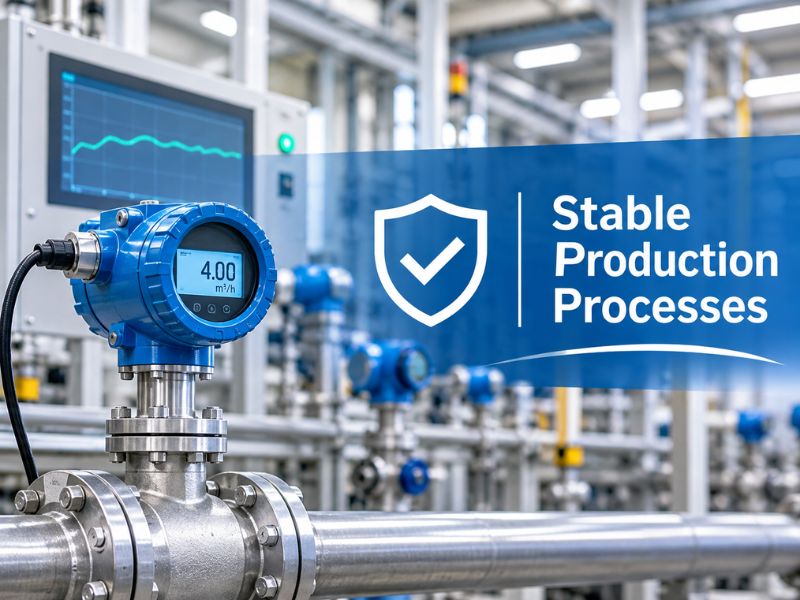
If your production line is slow, at least you know where the problem is. You have a clear bottleneck to solve. But if your line is fast and unstable, you have a much bigger problem. Quality fluctuates, dimensions drift, and performance is unpredictable. This is a nightmare to manage. In the valve industry, consistency is everything. The fit between a ball and its seat, the finish of a valve stem, and the torque required to operate a valve are not suggestions; they are critical performance parameters. Even if all your parts are technically within their tolerance range, combining a part from the high end of its tolerance with one from the low end can lead to performance issues. You might produce a batch of valves that are all "in-spec" but behave differently in the field. This erodes customer confidence. Automating the process is how you solve this. But it’s not just about making a machine do the work. It's about making the process intelligent through in-process control.
Moving from Inspection to Prevention
Traditional manufacturing relies on final inspection. You make a big batch of parts and then test them at the end to find the bad ones. This is incredibly wasteful. It's like finding out an ingredient was wrong after you've already baked the entire cake. The modern approach, enabled by automation, is to move towards prevention through in-process control. Instead of just running, your automated system is constantly checking its own work.
- For Machining: It uses probes to measure critical dimensions after a cut. It tracks the life of a cutting tool and signals for a replacement before quality starts to degrade.
- For Assembly: It uses sensors to confirm a part is present before moving on. It monitors the force and distance during a press-fit operation to ensure a proper seal. It controls the exact torque applied to a fastener.
If any parameter goes outside the set window, the machine can flag the part or even stop and alert an operator. This changes everything. You aren't just replacing human hands; you are replacing human error and inconsistency with machine precision and vigilance. You stop making bad parts in the first place.
FAQs
Q1: What's the best first step for automating a valve factory?
A: Start with your biggest bottleneck. Often, this is a highly repetitive machining task or a manual testing process that holds up production. Automating these areas first gives you the quickest and most measurable return on investment.
Q2: Will automation work if I produce many different products in small batches?
A: Yes, but you need flexible automation. Modern robotics and programmable systems can be designed for quick changeovers. The key is to standardize your tooling and programming approach to minimize downtime between different product runs.
Q3: Does automation mean I need fewer workers?
A: It means you need workers with different skills. Automation reduces the need for manual labor but increases the need for skilled people who can program, maintain, and troubleshoot the automated systems, turning them into technicians and process managers.
Final Thought
The goal of automation is not a factory with no people; it's a factory with no surprises. It's about achieving stable, predictable manufacturing. At BCST, we partner with you to identify the real problems and implement automation that delivers consistency, quality, and a genuine return on your investment.

 English
 Arabic
 Russian
 French
 Spanish